QUICK TAKES (#16)
Oscars...Shmoscars (!) And putting 2025 to bed!

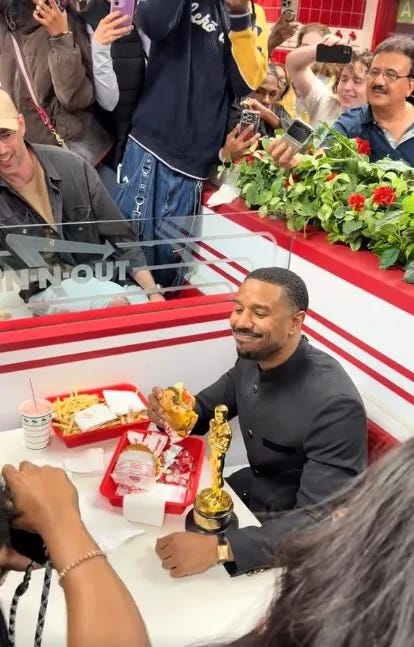
When the most viral moment of this year’s Academy Awards (its 98th) occurs AFTER the ceremony, it’s a fair bet that the entire construct of the event is in trouble. Indeed, ratings revealed that only 17.86 million viewers watched the Oscars live in the U.S. (down 9% from last year) and its move soon to YouTube in 2029 signals that even the Academy recognizes that its relevance is on the wane.
It’s wild to think that just a decade ago, the Oscars had more than twice as many viewers in the U.S. (36 million). And, if one goes back to just 1998, the year Titanic won, over 55 million viewers watched on the boob tube (2nd only to the 85 million who watched in 1973).
One can point to a few quick reasons for the potential drop. For starters, it could be said that viewers (especially younger ones) don’t want to spend the three to four hours it takes for the entire ceremony to unfold when they can simply look at instant clips, highlights, and reports via other sources. Related to that is the fact that so many people are now in their own movie watching silos due to Netflix (et al). As a result, fewer films are touching a national and universal zeitgeist (at least at the moment).
And third, it could be argued that there seemed to be so many public awards ceremonies before the Oscars, that by the time they finally came around it seemed almost anti-climactic. Though there were slight hopes for other movies, this season always seemed like a clear cut film bout between “One Battle After Another” and “Sinners” — and with both cleaning up amongst critics’ columns and awards shows alike, this year’s Oscar winners almost seemed ho-hum (and when one compares “One Battle After Another’s” US$200 million+ box office with China’s “Ne Zha 2”, the year’s global topper with over two billion US dollars, its audience seems almost anemic).
Still, there were some great and important moments that took place long before Best Actor winner Michael P. Jordan parked himself at fast food restaurant In-N-Out for a well deserved post-Oscar meal (he supposedly picked up the tab for 200 hungry eaters who came after him as well), and they deserve special mentions.
(From the outset, Oscar viewers were assured they were in good hands with an opening that weaved in several Best Picture nominees.)
THE BEST
Conan O’Brien proved once again that he was the reliable comedic host this year’s Oscars needed. It began with an utterly brilliant comedic cold open and continued with a monologue that laid the jokes on thick without being overtly political or offensive. So refreshing in these uncertain times.
Several of the other best moments were provided via songs, especially when many of the cast of singers, including bluesman Buddy Guy, performed a song from “Sinners”onstage while acclaimed ballet artist Misty Copeland danced along. The Kpop trio Huntrix matched the exuberance with a performance of their nominated song “Golden” before an ecstatic night stick waving audience. No surprise then when they won shortly after.
And one of the evening’s most poignant scenes took place when casts from many of director Rob Reiner’s films appeared onstage while actor/comedian Billy Crystal spoke about the man and his work in the wake of his untimely death earlier this year. It was all part of a memoriam tribute that — for the most part — was filled with class and taste.
As for the awards themselves, it was a night filled with notable firsts and achievements. “Sinners”, with its 16 nominations, became the film with the most nominations ever (16) and most black nominees (10). This included cinematographer Autumn Cheyenne Durald, who simultaneously became the first woman of color, first woman, AND first Filipino to win an Oscar for Best Cinematography. But even though it won four awards, “Sinners” also came away as the biggest loser ever (by losing 12).
(Members of the “Sinners” cast performing during the 98th Academy Awards.)
Other firsts included the debut of the “Best Casting” award, won by eventual Best Picture winner “One Battle After Another”. Jessie Buckley became the first-ever Irish actress to win for her performance in “Hamnet”. “Sentimental Value” became the first ever Norwegian film to win in the Best International Film category. “Golden” became the first-ever Kpop song to win. And Amy Madigan’s Best Supporting Actress win for her role in “Weapons” — aside from being a landmark performance — was notable as it came 40 years after her last nomination (another record).
THE WORST
When compared to some Oscar telecasts, this year’s awards were mostly smooth, though a member of the “Kpop Demon Hunters’” songwriting team was cruelly cut off during his moment of glory. And given the talents that the cast of “Bridesmaids” possess, their onstage skit was decidedly lackluster compared to what they’re capable of. And Barbra Streisand’s tribute to one-time co-star Robert Redford was well-intentioned but meandering. And whose idea was it for her to warble a few bars from “The Way We Were”?
(This car chase scene alone was one of many reasons why “One Battle After Another” is much more than just a best film of 2025).
2025’s BEST
Now that the Oscars are over, it’s high time to put the films of 2025 to bed. But if you’re looking for a personal view, these were the year’s best films:
One Battle After Another
Sinners
F1
Weapons
Sure, it was hard to tell where “One Battle After Another” was going at times, but in other parts this generational story about activists and the military officers who pursue them was timely and breathtaking. One could point to any number of scenes, but Leonardo DiCaprio and Benicio Del Toro preparing to go on the run was technically brilliant, while the last hour was classic 70s-style cinema. This one will be relevant for years.
“Sinners” was incredible as well, both for its set design and plot twists. Cinemaphiles have already writ large about one particular scene in the middle, which spectacularly sums up the history of black music in a scant four minutes. But the juxtaposition between a black story set in Depression-era Mississippi and Irish vampires was a mash-up on a whole other level. It’s conclusion had “Dusk Til’ Dawn” vibes, yet it was a story with class, sass, originality, AND frights.
(A trio of Irish troubadours were both beautiful and creepy in “Sinners”).
And plenty can — and have — poked fun at “F1”, but to these eyes it was pound for pound the most fun and the biggest guilty pleasure one could have had at the cinema last year. Producer Jerry Bruckheimer updated his glossy shtick for a new century, and even the cheesy race car announcer (as narrator) worked. So did the classic young cocky driver versus the grizzled veteran story. Brad Pitt somehow made the idea of a 60-something Formula One driver believable. Scintillating race scenes only enhanced the pleasure.
(Producer Jerry Bruckheimer updated his tried-and-true filmmaking gloss in “F1”.)
Overall, “Weapons” might not have been truly excellent (it didn’t all add up), but the moment Amy Madigan arrived as Gladys, the unforgettable eccentric newcomer, the stakes were immediately raised and the wackiness went up a notch. The film was no longer about a group of kids disappearing in a town, but rather, what the heck is this woman all about? And the frights and delights kept coming…
WORST
“HIM”
“Resurrection”
If you want to be traditional, it would be easy to point to a film like “Bride Hard” (a shameless comic “Die Hard” rip off), but it did have its moments. Though “HIM” had an intriguing cinematic style, it was neither a football film nor a straight murder mystery. Instead, it offered the worst features of both and was downright hard to sit through.
And if one wanted to look at one of the cinematic voice of the future, director Bi Gan is your man. The images he created in “Resurrection” are fantastic and inimitable. He’s on another level. It’s just a shame that the six segments that make up this 21st century film were so incomprehensible and long that they were literally sleep inducing.
BEST TV
THE STUDIO
Okay, not every episode was perfect. In fact, it seemed as though every other one of the 10 episodes was genuinely good. But the ones that were turned out to be more than just good: they were instant stone cold classics (both comically and as an accurate portrayal of Hollyweird). Seth Rogan’s simplistic concept for “The Studio” meant that his Matt Remick character quickly went from artistic film exec to studio CEO in the blink of an eye, and then ran with it. The story arc shamelessly borrowed from “Curb Your Enthusiasm” in that his character would regularly encounter, run into, and deal with real life actors and directors, so cue episodes revolving around Martin Scorsese, Ron Howard, actress Greta Lee, and more. The late Catherine O’Hara memorably served as Remick’s bitter mentor. And the stakes were constantly raised and deflated — similar to a comic balloon — right up to the gut busting, star-studded finale. “The Studio” deserves every award it has won so far, and one gets the feeling that Rogan will keep the quality control — and the laughs coming — for as long as he has the desire.
(Former film fan turned CEO Matt Remick (Seth Rogan) encountering director Martin Scorsese during “The Studio’s” opening episode.)
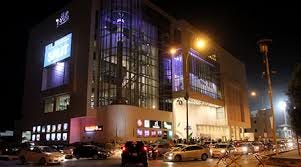
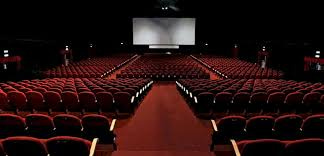
Pakistan has a stored cinema history dating back many decades. For years, one of Karachi’s favorite one film cinemas was Palace. The 250-seater was best known for showing sold-out screenings of 1973’s “The Exorcist” before it eventually closed in the 1990s. In a similar vein to other Asian cities, single cinemas have since largely been replaced by multi-cinema complexes. Today, Nueplex (seen above), is the largest theater in the capital city, boasting 1,200 seats, five theaters, and three of the largest screens in the entire country. It regularly features a mixture of Bollywood, local, and Western films (with new release “Hail Mary” opening there this weekend).
Sinners is messy and overrated. The music scene was out of place added nothing to the story. One Battle was entertaining, but PTA has never matched Boogie Nights or Magnolia. Another case of a director being rewarded for past brilliance à la Scorsese's Departed Oscar.